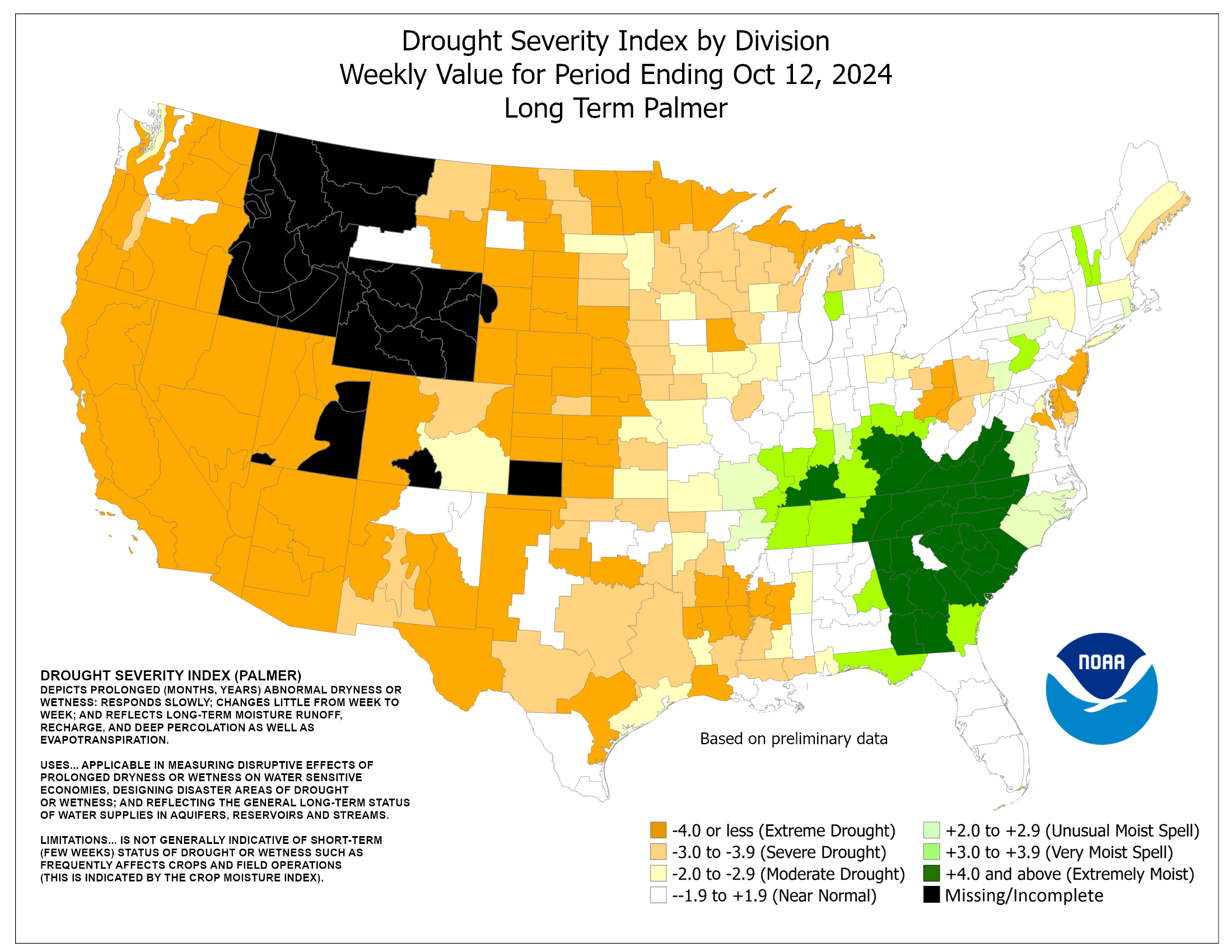
If you tuned into the debate on a drought bill in the House this week, you would have gotten a bleak picture of the agriculture industry in a state that fills the produce aisles of much of the rest of the country. You also would have heard the water shortage blamed on radical environmentalists who sacrificed farms to protect fish in California and the failure to build any new dams over the last 40 years. The Western Water and American Food Security Act of 2015, written to correct those problems, passed 245-176 on Thursday, with only five Democrats joining nearly all Republicans to support it.
“We’ve watched our lawns turn brown; we’ve watched our water bills skyrocket; we’ve watched businesses shut down; we’ve watched thousands of farm workers thrown out of work,” Rep. Tom McClintock, R-California, a co-sponsor of the bill, said. “We will not solve our water shortage until we build more dams; that’s what our bill does.”
Despite McClintock’s rhetoric, California’s agriculture employment has actually grown in recent years. And California stopped building dams decades ago in large part because 1,500 already occupied most stretches of rivers where dams make economic sense.
Despite its passage, the House bill is going nowhere fast. The White House threatened a veto. The Interior Department sent a letter arguing that the bill could unintentionally worsen water shortages. Also, Democratic Sen. Dianne Feinstein, who is expected to be a major player in drafting a Senate bill, stressed that she opposes provisions in the House bill that “would violate environmental law.”
“We need to facilitate water transfers and maximize water pumping without violating environmental laws like the Endangered Species Act or biological opinions,” Feinstein said in a statement.
Sen. Lisa Murkowski, R-Alaska, who chairs the committee that would draft a Senate bill, plans to craft a West-wide legislation but not until the fall. “Senator Feinstein’s ideas will be central to moving that forward,” Murkowski’s spokesman Robert Dillion told HCN.
There’s no question that these are tense times for Central Valley farmers, as HCN has reported. Agriculture jobs in the San Joaquin region in March, the most recent month with state data, were down by 4,000 from last year to 164,200. But what’s unexpected is that they’re up from 2011, before the drought. And statewide, average annual agriculture employment actually grew slightly from 2013 to 2014, continuing a decade-long trend that’s driven by a shift to more labor-intensive crops like fruits and almonds. Still, the drought has forced some farmers in the Central Valley and elsewhere to reduce their workforces as they’ve fallowed fields because of water shortages.

Even if all the proposed storage had been built and filled before the drought, the state still would be low on water after four years of extreme drought. Lund said that the bill’s sponsors overstate how much water is available in California, and that the state would be better off with a multi-pronged approach that includes more recycling of wastewater, recharging of groundwater during wet times, constructing water pipelines, and some additional storage projects.

“Farmers could take every drop of water and leave a dry streambed,” said Doug Obegi, a lawyer for Natural Resource Defense Council. “I don’t think that’s the vision of the rivers of the West that most Americans have.”
This was one of many provisions opposed by the Interior Department, because it would “negatively impact our ability to protect Delta fish and wildlife in the long-term; particularly those species listed under Federal and State endangered species laws,” the Interior Department said in a letter.
What’s more, Interior’s letter warned the bill would have the “unintended consequence of impeding an effective and timely response to the continuing drought while providing no additional water to hard hit communities.”
But with the Senate moving slowing on its bill and a presidential veto in the mix, it’s impossible to predict what if any provisions in the House bill might endure.
“It’s too early to say. This could be a major step towards dramatically rolling back environmental protections in California or just another act of theater by far right politicians in Congress,” Obegi said.
Elizabeth Shogren is HCN’s DC Correspondent. Follow @shogrene